
When More Information Stops Helping

I’m going in a slightly different direction today—and maybe this will resonate.
This morning, I opened my email and felt that familiar wave of overwhelm. So many well-intentioned people telling me what to do for health, longevity, optimization. Add in podcasts, articles, constant input… and I realized something pretty clearly:
I’m full.
Not in a good way—in an overloaded, saturated, “nothing else is actually landing” kind of way.
I’ve been immersed in this space for a long time. And lately, it feels like my brain isn’t processing anymore—it’s just collecting.
So for the next few days, I’m stepping back.
More time outside. Long walks. Getting creative in the kitchen. Maybe pulling out my watercolors. And I’ve returned to something I picked back up last year after not touching it for years—cross stitch.
I started stitching as a young child and kept up with it well into my 30s. Then life changed, my daughter was born, and it slowly fell away.
It had been about 25 years.
And now, coming back to it, I’m noticing something I didn’t expect—it feels grounding in a way that scrolling never does. My hands are busy, my mind settles, and at the end there’s something real I’ve made. Something I can keep. Maybe even pass down someday.
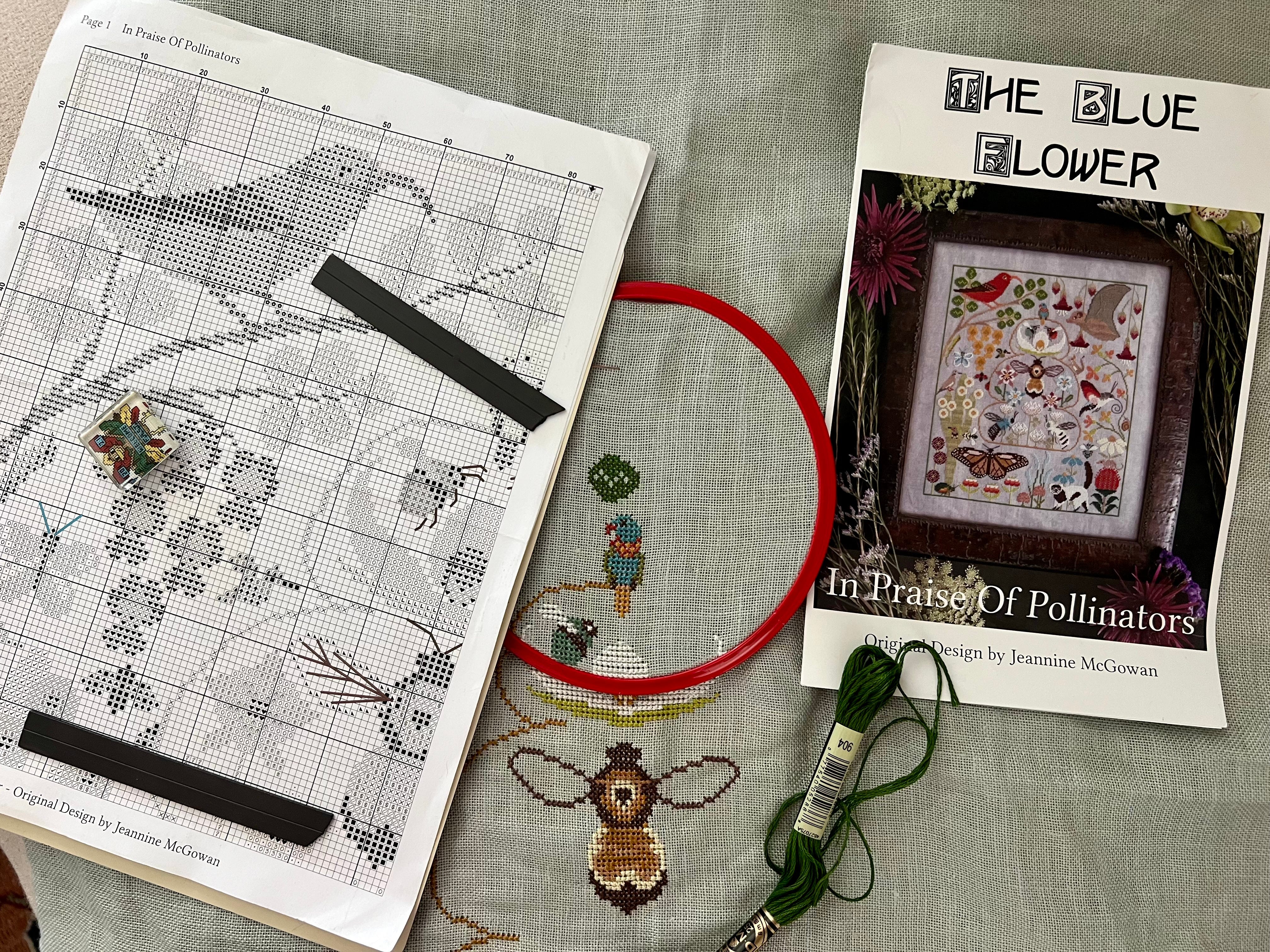
Apparently, this isn’t just me.
What I’m returning to is now gaining traction—often called “grandma-core” or “cozy hobbies.” And while the name is new, the pull toward it isn’t.
I recently read an article in Southern Living that put words to what I think a lot of us are feeling:
We’ve become so accustomed to constant digital stimulation that we don’t even question it anymore. The endless input, the algorithms, the pressure to keep up. But quietly, something is changing. People are starting to reach for older, more tactile ways of spending time—not out of nostalgia, but out of necessity.
Burnout. Digital overload. Mental fatigue.
At some point, you just hit a limit.
And what we’re reaching for instead is slower, simpler, more tangible.
Things you can touch. Things that take time. Things that don’t demand performance.
Mental health professionals are paying attention to this shift. Hands-on activities—knitting, baking, puzzles, gardening—engage the senses in a way screens don’t. They pull you into the present moment. They move your focus away from outcome and back to process.
And physiologically, something real is happening.
These repetitive, rhythmic movements signal safety to the body. They help shift us out of that constant low-level “on” state—what we’d call sympathetic dominance—and back toward parasympathetic regulation. Heart rate slows. Breathing deepens. Cortisol begins to drop.
Not because you forced yourself to relax.
But because your body recognized it was allowed to.
There’s no app. No timer. No right way to do it.
Just your hands, your attention, and something simple in front of you.
There’s also something powerful about the boundaries these activities create.
A recipe ends. A puzzle gets completed. A piece of stitching moves forward, one section at a time.
In a world designed to keep us scrolling endlessly, that sense of completion is missing.
And maybe most importantly—it brings back patience.
We’ve gotten used to immediacy. Fast results. Constant feedback. But these slower hobbies interrupt that pattern. They remind us that not everything meaningful happens quickly.
You can see this shift happening everywhere—people baking again, gardening, picking up crafts, gathering for simple activities that used to feel ordinary.
But they’re not ordinary. They’re restorative.
They’re a way of stepping out of the noise and back into something that feels human.
Because at some point, more input isn’t the answer.
Sometimes the answer is less.
Less noise. Less urgency. Less consumption.
More space.
More presence.
More doing something simple, with your hands, that doesn’t need to be optimized or shared or turned into anything else.
Just something you can sit with.
And maybe that’s where a lot of what we’re looking for actually lives—
In those small, steady, quiet moments that don’t ask much from us… but give a lot back.
Until next time-
Tracy
Looking after yourself like this is so important and it’s something we as healthcare professionals forget far too easily.
We spend so much of our time focused outward on patients, outcomes, staying up to date that we rarely notice when we’ve crossed that line into overload. And often, we don’t step back until our minds (or bodies) force us to.
What you’ve described isn’t indulgent, it’s necessary. Creating space, using your hands, stepping away from constant input, that is not switching off from life, it’s returning to it.